
Aerospace Manufacturing ERP Requirements
Aerospace Manufacturing ERP Requirements Aerospace manufacturers require ERP software that manages far more than accounting, purchasing, and inventory. The system must connect product configuration, customer requirements, approved suppliers, material traceability, Work Orders, production operations, inspections, quality records, employee qualifications, and shipment history. Aerospace manufacturing frequently involves complex products, long supply chains, controlled materials, serialized assemblies, […]
What Is Shop Floor Tracking in ERP Software?
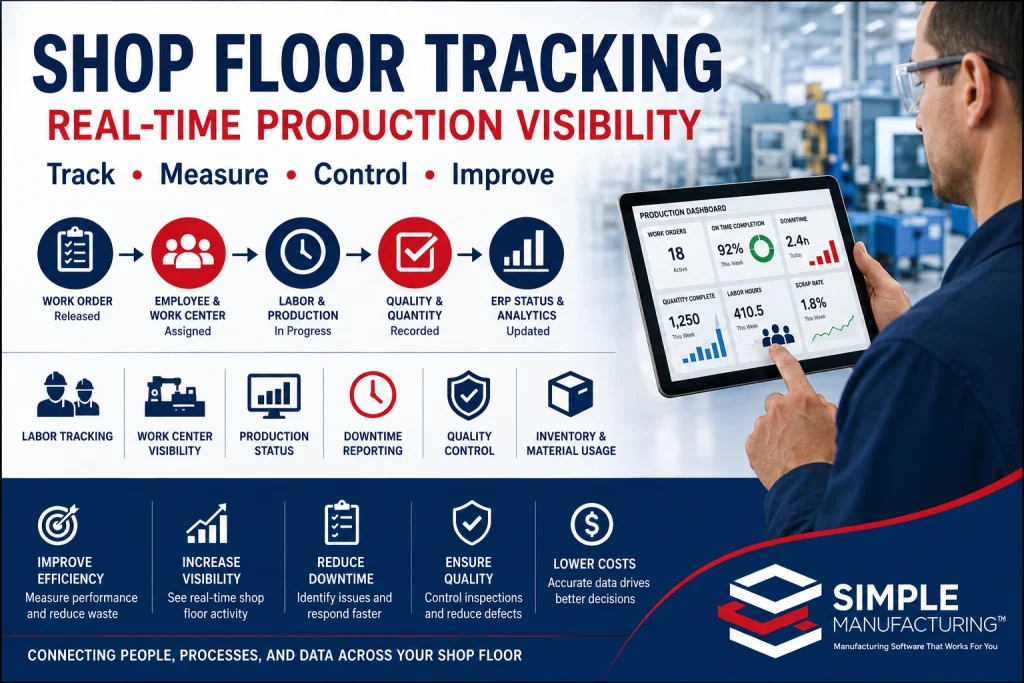
What Is Shop Floor Tracking in ERP Software? Shop floor tracking is the process of recording and monitoring production activity as manufacturing work is performed. It provides real-time visibility into Work Orders, routing operations, employee labor, completed quantities, scrap, downtime, work-center activity, material usage, inspections, and production status. When shop floor activity is integrated with […]
What Is MRP? Material Requirements Planning for Manufacturers
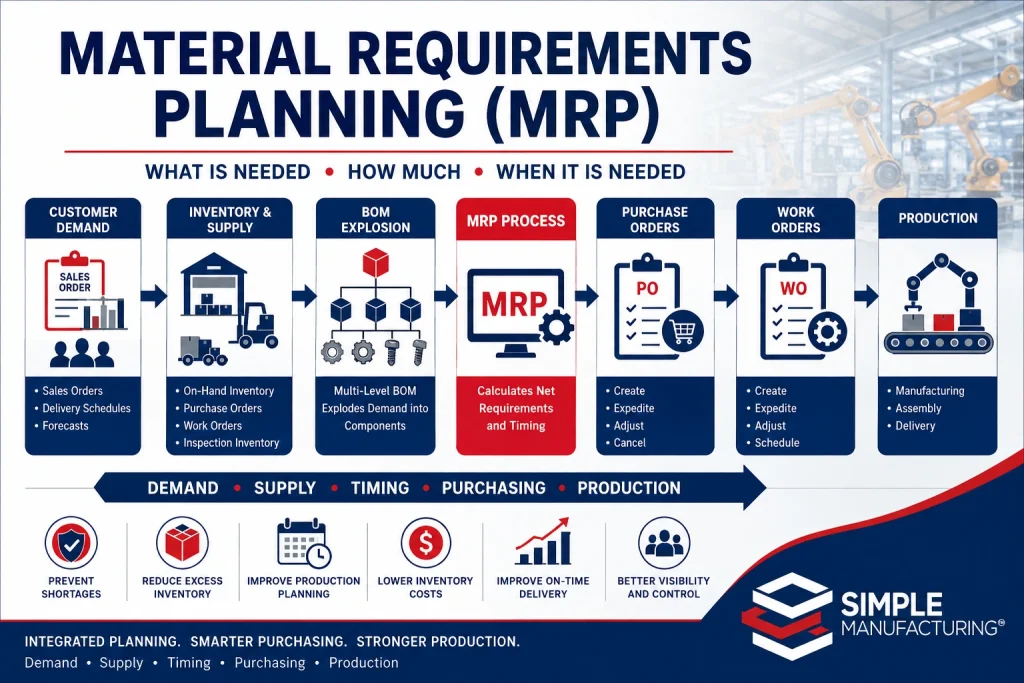
What Is MRP? Material Requirements Planning for Manufacturers Material Requirements Planning, commonly called MRP, is the manufacturing-planning process used to determine which materials and products are required, how many are needed, and when purchasing or production must begin. MRP connects customer demand, forecasts, inventory, Bills of Materials, Purchase Orders, Work Orders, lead times, and production […]
Manufacturing Work Orders in ERP Software: Purpose, Process, and Benefits
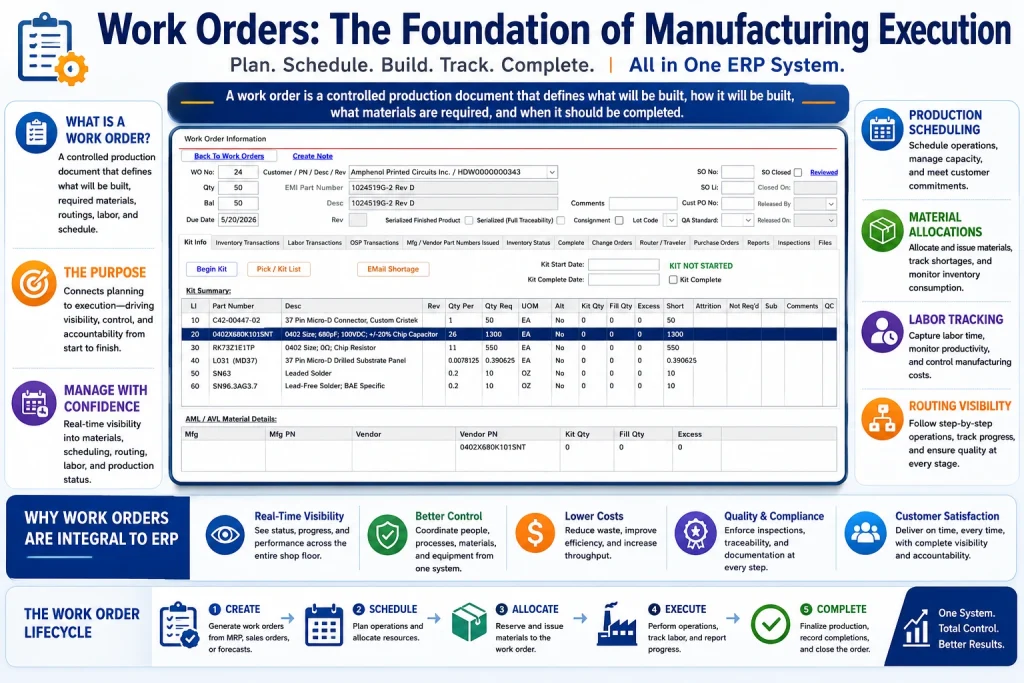
Manufacturing Work Orders in ERP Software: Purpose, Process, and Benefits A manufacturing Work Order is the controlled production record used to define what must be manufactured, how many units are required, which materials and operations are needed, when production is due, and how labor, inventory, quality, traceability, and cost will be recorded. Work Orders are […]
Quality Clauses in Customer Purchase Orders: Manufacturing Requirements and Contract Review
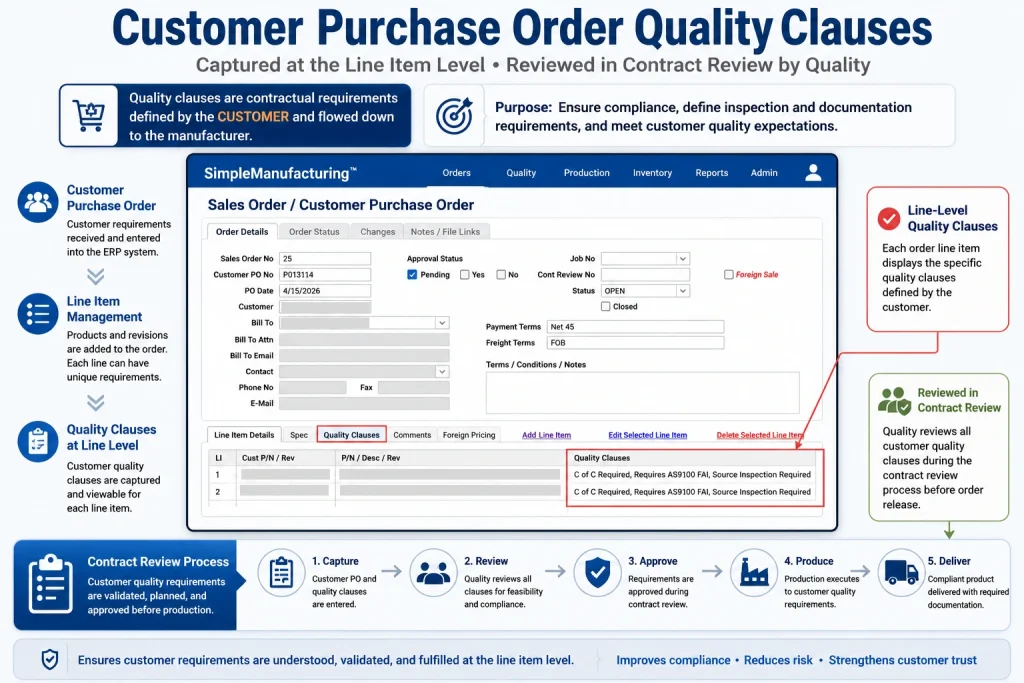
Quality Clauses in Customer Purchase Orders: Manufacturing Requirements and Contract Review Quality clauses in customer Purchase Orders are contractual requirements that define how a manufacturer must produce, inspect, document, trace, package, certify, and deliver a product or service. These clauses are issued by the customer and become part of the manufacturer’s contractual obligations when the […]
Why Internal Part Numbers Matter in ERP Software
Why Manufacturers Should Use Internal Part Numbers in ERP Software An internal part number gives a manufacturer a stable, controlled identifier for every raw material, purchased component, subassembly, and finished product in its ERP system. Many manufacturers must decide whether to create their own internal part numbers or use part numbers supplied by customers. Reusing […]
Electronics Manufacturing Software: Why Accounting Systems Fall Short | SimpleManufacturing
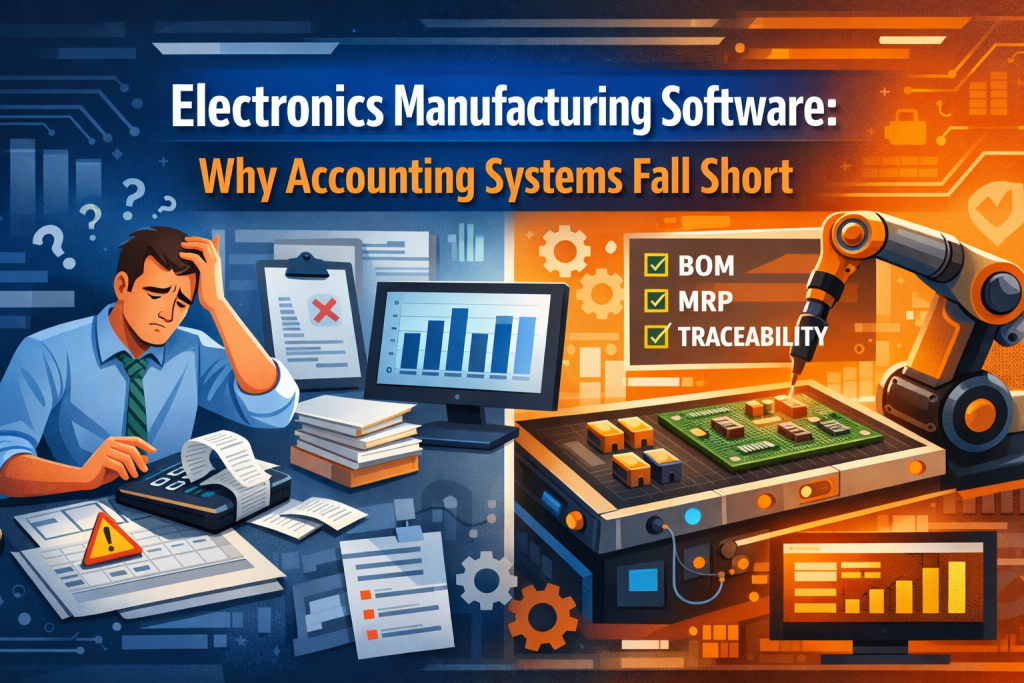
Electronics Manufacturing Software: Why Accounting Systems Fall Short Electronics manufacturers require more than basic accounting and inventory transactions. They must manage multi-level Bills of Materials, component revisions, approved manufacturer parts, supplier relationships, date codes, lot and serial traceability, material shortages, Work Orders, production routings, quality requirements, and actual manufacturing costs. General accounting systems are designed […]
5 Manual Processes You Should Automate in 2026
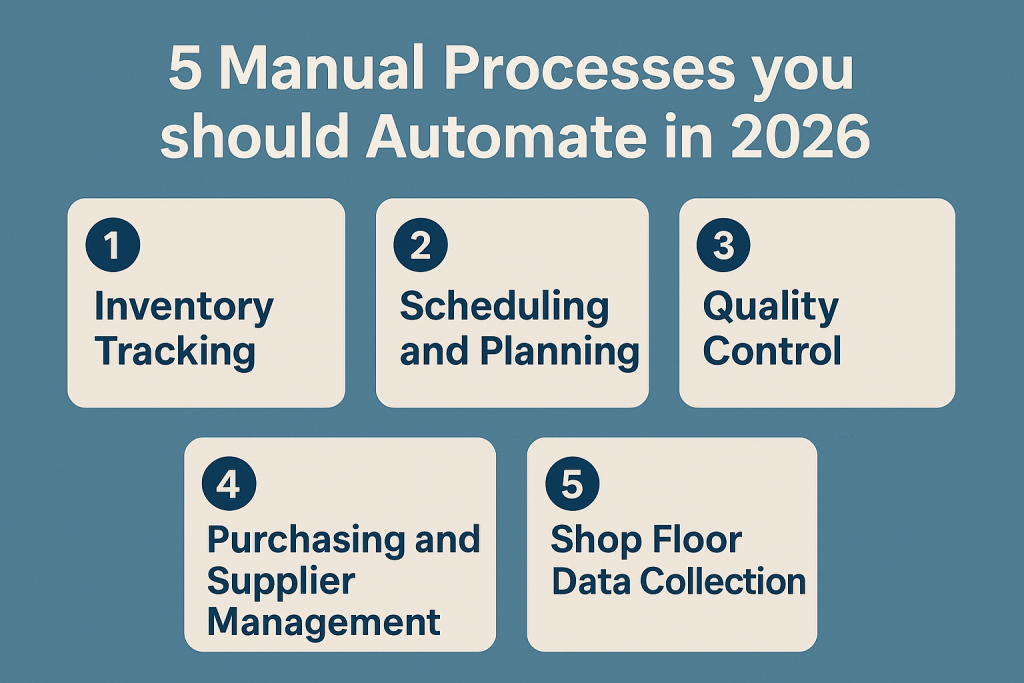
5 Manual Manufacturing Processes You Should Automate Manufacturing automation improves accuracy, visibility, productivity, and responsiveness by replacing paper forms, spreadsheets, delayed data entry, and disconnected manual workflows. Manufacturers often rely on manual processes because they are familiar and appear flexible. Over time, however, spreadsheets, paper travelers, handwritten inspection forms, whiteboard schedules, and verbal workarounds create […]
ABC Analysis for Inventory Management | SimpleManufacturing™
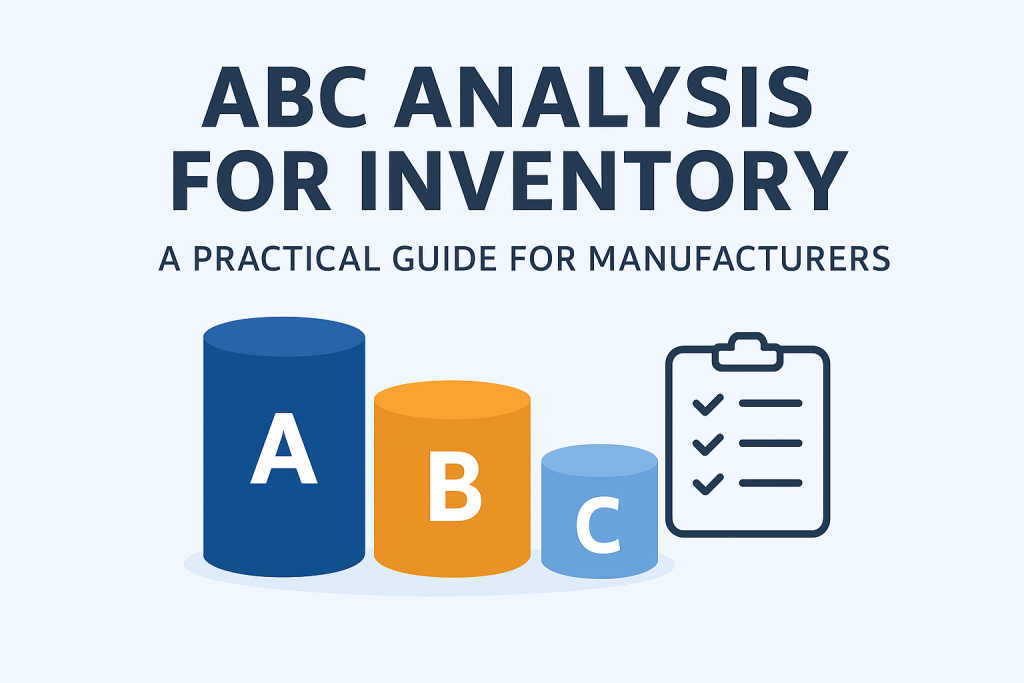
ABC Analysis for Inventory Management ABC Analysis helps manufacturers classify inventory according to its financial and operational importance so they can focus inventory controls, cycle counting, purchasing, and planning resources where they produce the greatest benefit. Most manufacturers manage hundreds or thousands of raw materials, purchased components, subassemblies, finished goods, supplies, and replacement parts. Applying […]
Top Inventory Management Tips for Manufacturing Businesses
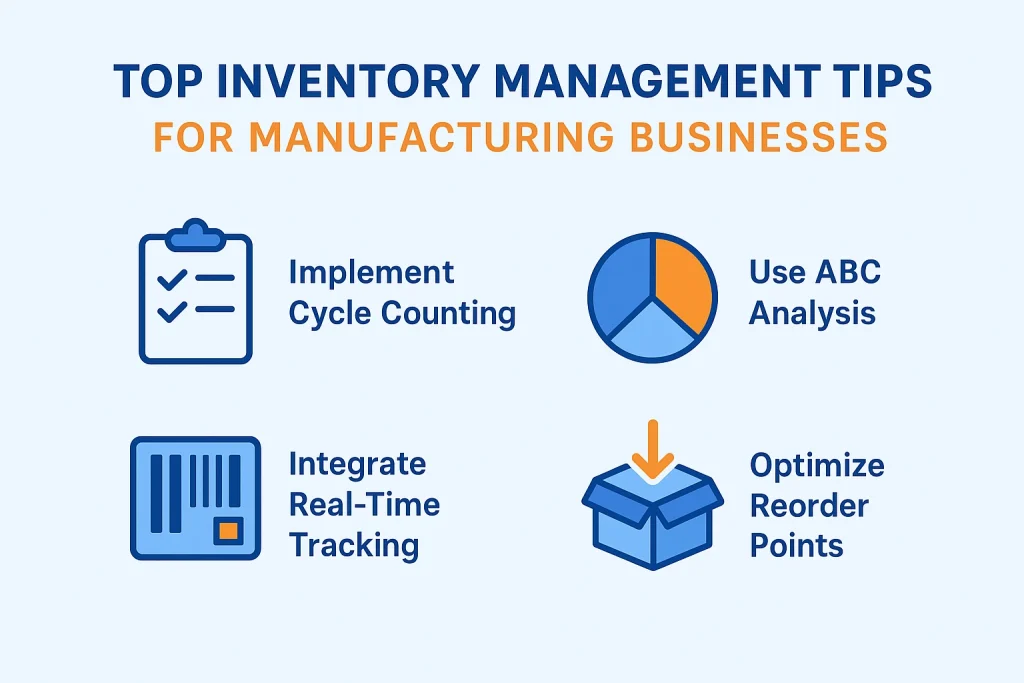
Top Inventory Management Tips for Manufacturing Businesses Effective inventory management helps manufacturers maintain accurate stock balances, prevent material shortages, reduce excess inventory, improve production scheduling, and protect working capital. Manufacturing inventory is more complex than simply recording quantities received and shipped. Materials move through receiving, inspection, storage, Work in Process, outside processing, finished-goods inventory, and […]