
What Is MRP? Material Requirements Planning for Manufacturers
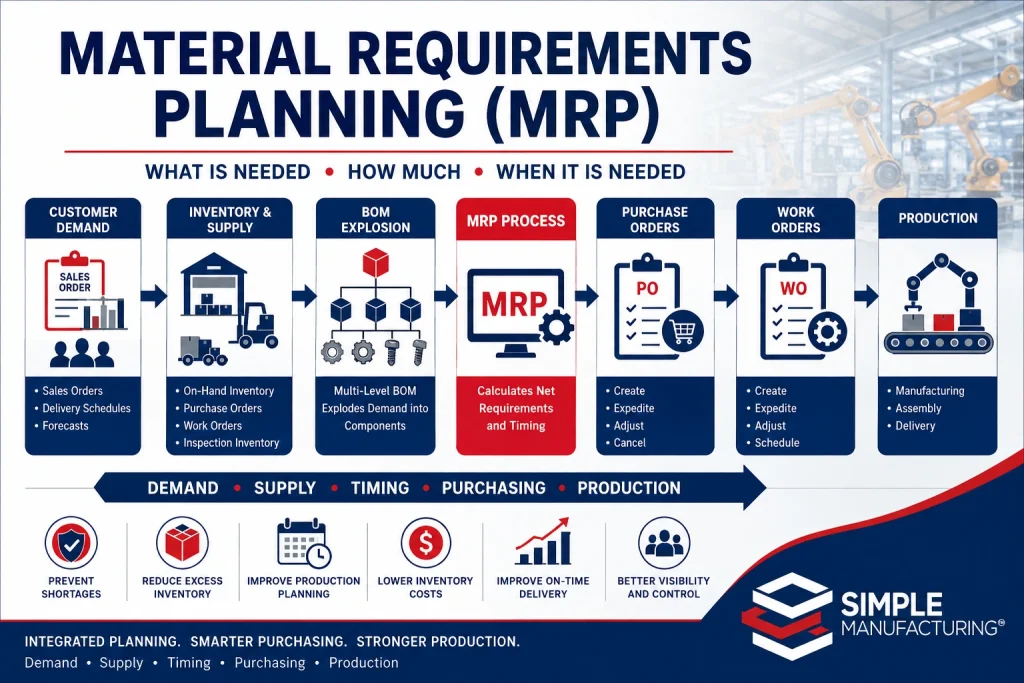
What Is MRP? Material Requirements Planning for Manufacturers Material Requirements Planning, commonly called MRP, is the manufacturing-planning process used to determine which materials and products are required, how many are needed, and when purchasing or production must begin. MRP connects customer demand, forecasts, inventory, Bills of Materials, Purchase Orders, Work Orders, lead times, and production […]
Manufacturing Work Orders in ERP Software: Purpose, Process, and Benefits
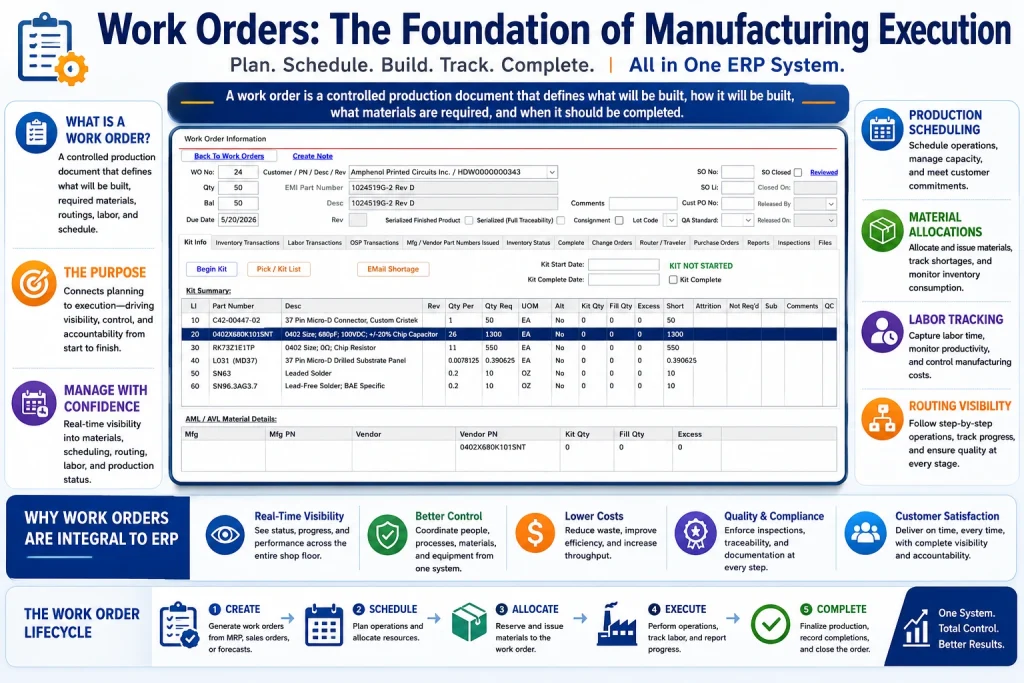
Manufacturing Work Orders in ERP Software: Purpose, Process, and Benefits A manufacturing Work Order is the controlled production record used to define what must be manufactured, how many units are required, which materials and operations are needed, when production is due, and how labor, inventory, quality, traceability, and cost will be recorded. Work Orders are […]
What is a Bill of Materials (BOM)? | SimpleManufacturing™
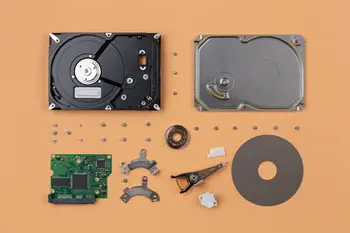
What Is a Bill of Materials (BOM)? A Bill of Materials (BOM) is the complete list of raw materials, purchased components, manufactured subassemblies, quantities, and instructions required to build a finished product. In manufacturing, the BOM serves as the product’s structural blueprint. It connects engineering, purchasing, inventory, production, costing, quality, and document control so every […]
Why Internal Part Numbers Matter in ERP Software
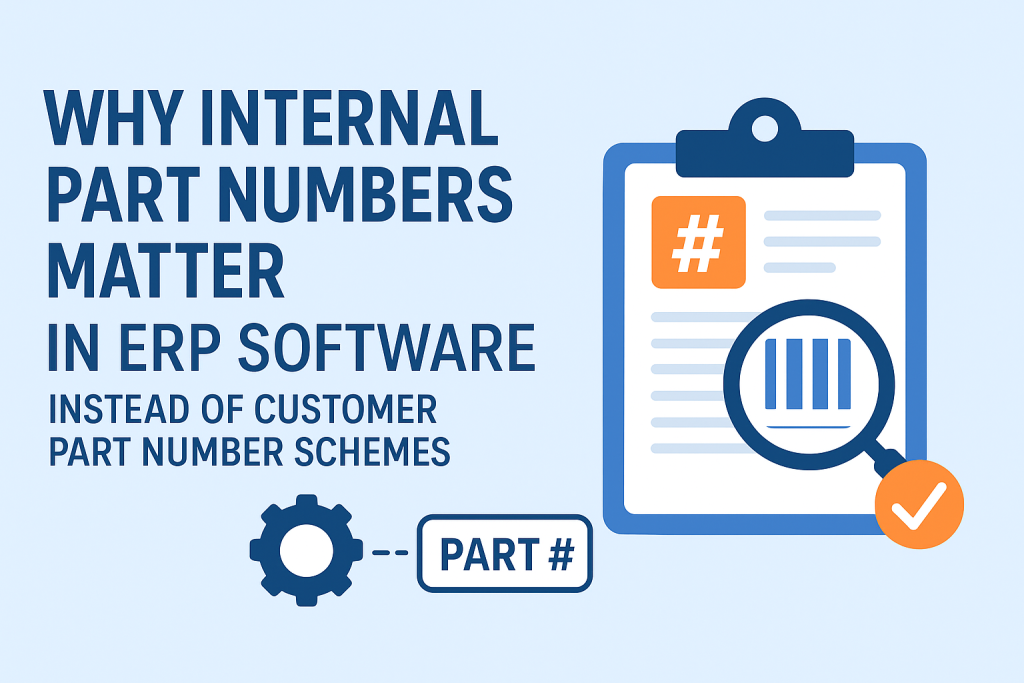
Why Manufacturers Should Use Internal Part Numbers in ERP Software An internal part number gives a manufacturer a stable, controlled identifier for every raw material, purchased component, subassembly, and finished product in its ERP system. Many manufacturers must decide whether to create their own internal part numbers or use part numbers supplied by customers. Reusing […]
Electronics Manufacturing Software: Why Accounting Systems Fall Short | SimpleManufacturing
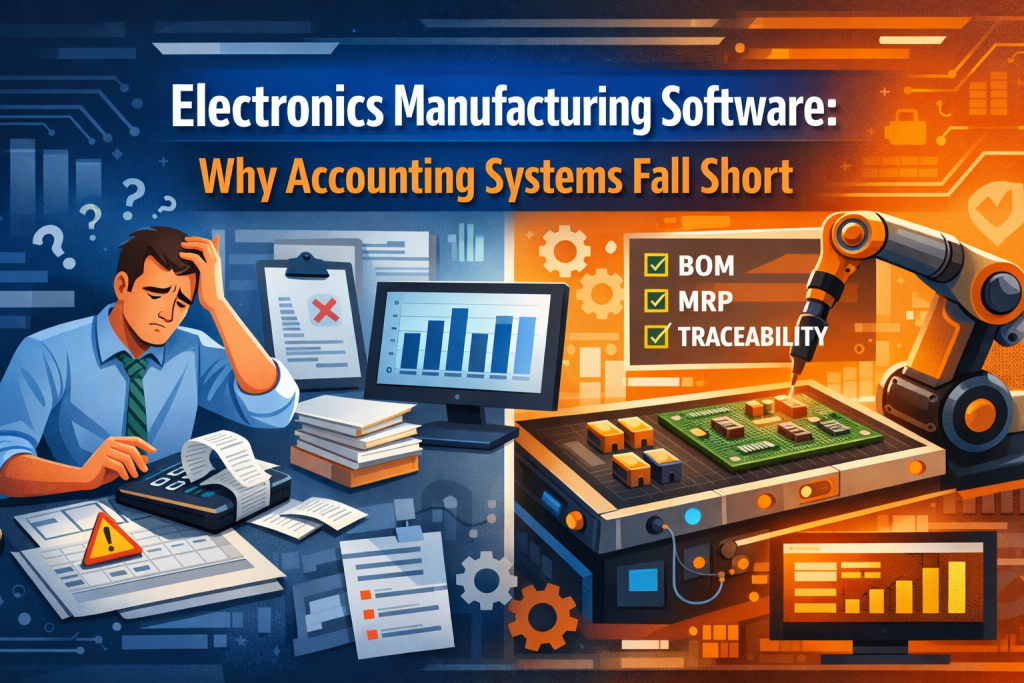
Electronics Manufacturing Software: Why Accounting Systems Fall Short Electronics manufacturers require more than basic accounting and inventory transactions. They must manage multi-level Bills of Materials, component revisions, approved manufacturer parts, supplier relationships, date codes, lot and serial traceability, material shortages, Work Orders, production routings, quality requirements, and actual manufacturing costs. General accounting systems are designed […]
Intelligent Part Numbers in Manufacturing: Advantages and Disadvantages<
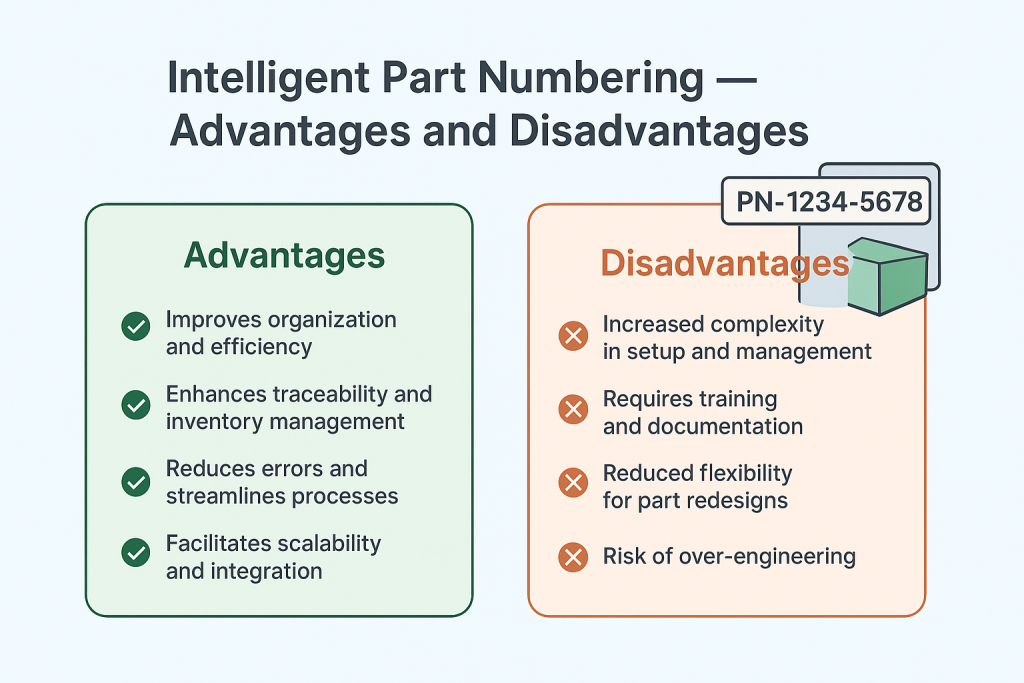
Intelligent Part Numbers in Manufacturing: Advantages and Disadvantages An intelligent part number uses a structured code to communicate information about an item, such as its product family, material, size, type, or revision. This can make part numbers easier for employees to recognize, but it can also create rigidity, ambiguity, and long-term data-management problems. Part numbers […]
Excel vs. ERP Software for Manufacturing
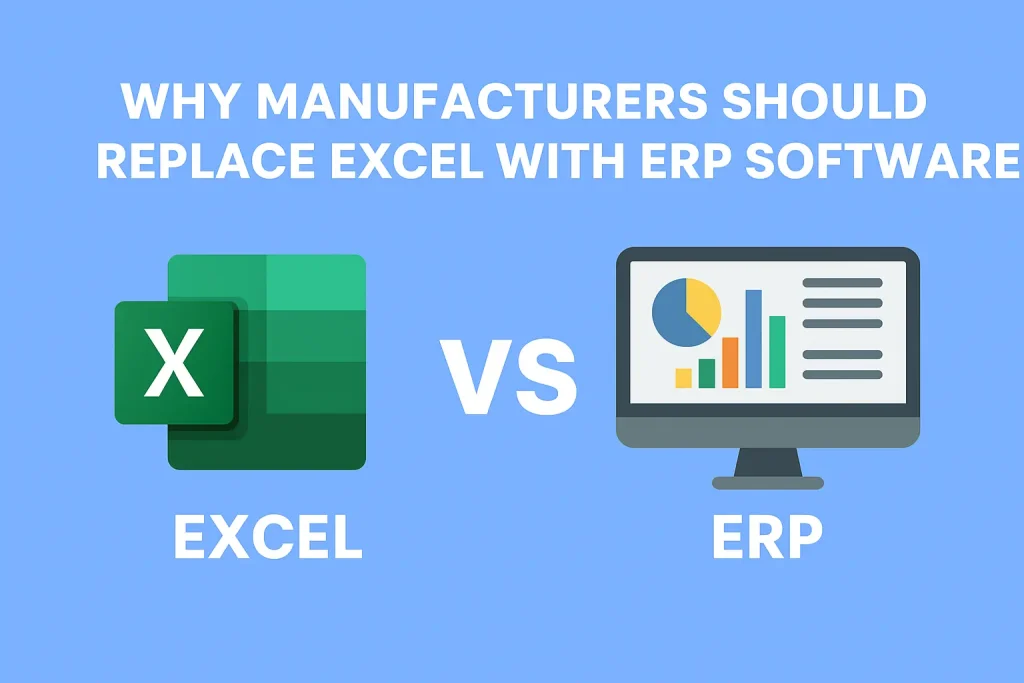
Excel vs. ERP Software for Manufacturing Excel is useful for calculations, lists, analysis, and temporary planning. It becomes much less effective when manufacturers use interconnected spreadsheets as the primary system for inventory, Bills of Materials, purchasing, Work Orders, production scheduling, quality, costing, and traceability. As manufacturing operations grow, spreadsheets often create duplicate entry, conflicting versions, […]
Change Order Management | Engineering Change Orders (ECO) for Manufacturing

Engineering Change Order Management for Manufacturing Engineering Change Order management provides a controlled process for requesting, evaluating, approving, implementing, and documenting changes to products, Bills of Materials, manufacturing routings, drawings, specifications, suppliers, processes, and quality requirements. Manufacturing products and processes rarely remain unchanged throughout their lifecycle. Materials become obsolete, customers revise requirements, suppliers change, quality […]
Manufacturing Work Order Management Software: Complete Guide to Shop Floor Control

Learn About Work Orders In Manufacturing Software, Details of Work Orders and the Benefits of Using Work Orders
Item Master Data Management in Manufacturing ERP Software
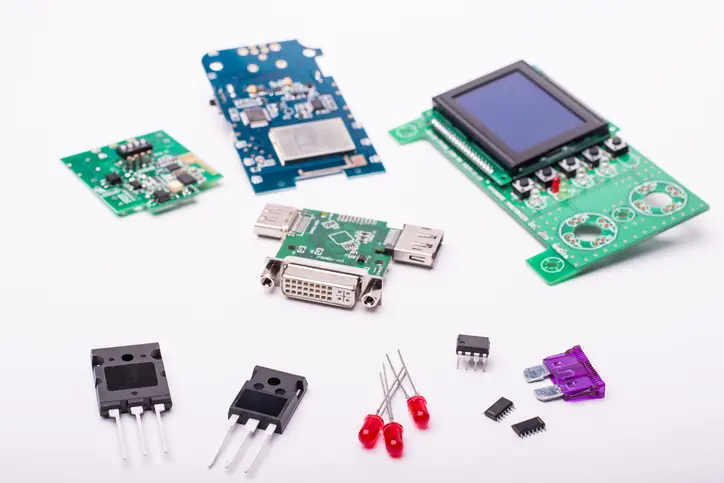
Item Data and Definition is an important part of manufacturing software. Find out what Item Date is, why Item Definition is important and the considerations when choosing an ERP Solution