
Inventory Management in Manufacturing: Complete ERP Guide, Benefits, and Techniques
Manufacturing inventory management is the process of planning, receiving, storing, controlling, allocating, consuming, tracing, valuing, and replenishing the raw materials, components, Work in Process, supplies, and finished goods needed to operate a manufacturing business.
Manufacturers must maintain enough inventory to support production and customer demand without purchasing so much material that cash becomes tied up in slow-moving, excess, or obsolete stock.
An effective inventory-management system provides visibility into what inventory is available, where it is located, how much is committed, what is expected from suppliers, what is being manufactured, which lots or serial numbers are involved, and what each inventory layer actually cost.
Successful inventory management ensures that the right material is available in the right quantity, at the right location, at the right time, and at a controlled cost.
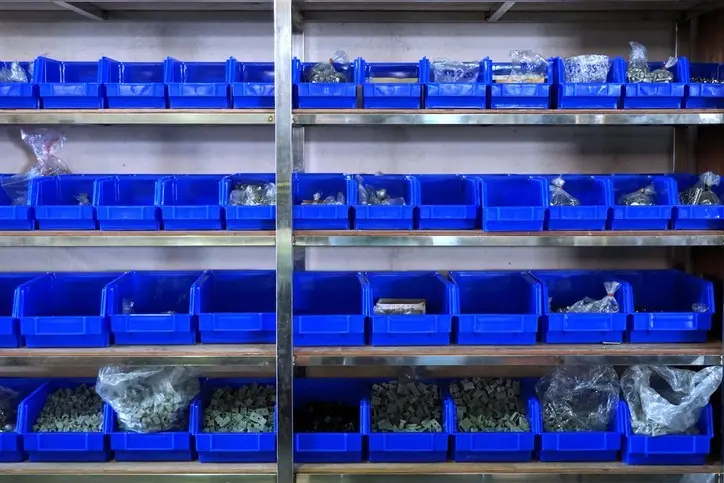
Manufacturing inventory management connects purchasing, receiving, material planning, production, finished goods, shipping, traceability, and inventory valuation.
What Is Inventory Management in Manufacturing?
Inventory management is the process of determining which materials and products are needed, how much should be maintained, where they are located, when they should be purchased or manufactured, and how they move throughout the business.
The goal is to balance two competing risks:
Too Much Inventory
Excess inventory ties up working capital, consumes warehouse space, increases handling cost, and creates greater exposure to damage, expiration, obsolescence, and write-offs.
Too Little Inventory
Insufficient inventory causes Work Order shortages, production delays, premium freight, missed deliveries, idle labor, lost revenue, and customer dissatisfaction.
Manufacturers therefore strive to maintain enough inventory to support current and forecasted demand while minimizing unnecessary investment.
and Forecasts
Supply Review
Recommendations
Consumption
Customer Fulfillment
What Is Considered Inventory?
Inventory includes more than finished products waiting to be shipped. In manufacturing, inventory may exist in several stages as material moves from supplier receipt through production and customer delivery.
| Inventory Type | Description | Examples |
|---|---|---|
| Raw Materials | Materials purchased for use in manufacturing. | Sheet metal, bar stock, resin, wire, chemicals, fasteners, and electronic components. |
| Purchased Components | Items bought from suppliers and installed into assemblies. | Motors, connectors, bearings, switches, circuit boards, and hardware. |
| Work in Process | Material and assemblies that have entered production but are not yet complete. | Machined parts awaiting plating, assemblies awaiting inspection, and partially completed Work Orders. |
| Subassemblies | Manufactured items used as components in higher-level products. | Cable assemblies, fabricated frames, circuit-board assemblies, and machined housings. |
| Finished Goods | Completed products available for shipment or sale. | Completed machines, packaged assemblies, replacement parts, and stocked products. |
| Packaging Materials | Materials used to protect, identify, and ship products. | Boxes, foam, labels, bags, pallets, and protective wrapping. |
| MRO Inventory | Maintenance, repair, and operating supplies used to support the business. | Cutting tools, lubricants, safety supplies, filters, and replacement machine parts. |
| Consignment Inventory | Material physically held by the manufacturer but owned by a customer or supplier. | Customer-supplied components, vendor-managed stock, and customer-owned raw material. |
| Inspection Inventory | Material received or produced but not yet approved for use or shipment. | Incoming material awaiting receiving inspection and finished goods awaiting final inspection. |
| Quarantined Inventory | Material placed on hold because its status is uncertain or nonconforming. | Rejected material, expired stock, suspect counterfeit components, and damaged inventory. |
Inventory as a Financial Asset
Inventory is commonly represented as a current asset on the balance sheet because it is expected to be converted into revenue through production and sale.
Manufacturers may separately report:
- Raw-material inventory
- Work-in-Process inventory
- Finished-goods inventory
- Inventory reserves
- Obsolete inventory
- Consignment or customer-owned material
Finished goods generally have the shortest path to revenue because they may already be available for shipment. Raw materials and Work in Process require additional production activity before they can be sold.
Inventory Quantity and Inventory Value Are Different
A company may need to track a physical quantity even when the material has no company-owned inventory value. Customer-owned or consigned material is a common example.
Benefits of Manufacturing Inventory Management
Improved Order Fulfillment
Accurate availability helps manufacturers produce and ship customer orders in the required quantity and on the required date.
Reduced Purchasing Cost
Visibility into on-hand inventory, open Purchase Orders, Work Orders, and demand prevents unnecessary purchases.
Improved Cash Flow
Reducing excess inventory allows cash to remain available for payroll, equipment, operations, growth, and other business needs.
Higher Customer Satisfaction
Reliable inventory information improves order promises, delivery performance, and product availability.
Less Obsolete Inventory
Slow-moving, excess, expired, and unsupported material can be identified before it loses additional value.
Fewer Production Delays
Material shortages can be detected before they interrupt Work Orders or idle employees and equipment.
Accurate Product Costing
Material issues, FIFO cost layers, labor, and production transactions create reliable actual manufacturing costs.
Improved Traceability
Lots, serial numbers, suppliers, receipts, Work Orders, finished goods, and shipments remain connected.
The Manufacturing Inventory Lifecycle
Inventory moves through a connected series of operational and financial transactions.
Inspection
Inventory
WIP
and COGS
| Lifecycle Stage | Inventory Activity | Financial Effect |
|---|---|---|
| Purchase Order | Material is ordered from a supplier. | Creates a purchasing commitment but usually no inventory asset yet. |
| Receipt | Material arrives and quantity is recorded. | Creates received inventory or inspection inventory. |
| Inspection | Material is accepted, rejected, or placed on hold. | Determines whether inventory becomes available for use. |
| Material Issue | Inventory is consumed by a Work Order. | Transfers cost from Raw Material into Work in Process. |
| Production | Labor, material, and outside processing are accumulated. | Builds Work-in-Process value. |
| Work Order Completion | Accepted product is received into Finished Goods. | Transfers accumulated cost from WIP to Finished Goods. |
| Shipment | Finished product leaves inventory. | Transfers inventory value into Cost of Goods Sold. |
| Return | Customer or supplier returns are processed. | May restore, quarantine, scrap, or credit inventory. |
Item Master Data Management
Accurate inventory begins with accurate Item Master data. Each inventory item should have one controlled identity and the attributes needed by purchasing, planning, production, quality, shipping, and accounting.
| Item Master Field | Inventory Purpose |
|---|---|
| Internal Part Number | Provides a unique identity throughout the ERP system. |
| Description | Explains the item in clear business terms. |
| Revision | Controls product and material configuration. |
| Make-or-Buy Classification | Determines whether the item is purchased or manufactured. |
| Inventory Stage | Identifies Raw Material, WIP, Subassembly, Finished Goods, Packaging, or another classification. |
| Unit of Measure | Defines how quantity is stored and transacted. |
| Purchase Unit | Defines how the item is ordered from suppliers. |
| Conversion Factor | Converts purchasing units into inventory units. |
| Lead Time | Supports purchasing and production planning. |
| Safety Stock | Defines additional quantity maintained to reduce shortage risk. |
| Reorder Point | Identifies when replenishment should be considered. |
| Lot-Control Requirement | Determines whether lot numbers must be captured. |
| Serialization Requirement | Determines whether individual units require serial numbers. |
| Shelf Life | Supports expiration and minimum-life controls. |
| Storage Location | Identifies where the item is normally stored. |
| ABC Classification | Supports inventory prioritization and cycle counting. |
| Inventory Accounts | Defines financial posting for Raw Material, WIP, Finished Goods, and COGS. |
Understanding Inventory Quantity Types
Manufacturers need more detail than one “quantity on hand” number.
| Quantity Type | Meaning |
|---|---|
| Quantity on Hand | Total physical quantity recorded in inventory. |
| Quantity Available | Quantity that can be used after allocations, holds, and restrictions are considered. |
| Quantity Allocated | Inventory reserved for a Sales Order, Work Order, or other demand. |
| Quantity in Inspection | Inventory received or produced but not yet accepted. |
| Quantity on Hold | Inventory blocked from use because of quality, customer, or administrative restrictions. |
| Quantity Rejected | Inventory identified as nonconforming. |
| Quantity on Purchase Order | Expected supply from open supplier orders. |
| Quantity on Work Order | Expected supply from open manufacturing orders. |
| Quantity in Transit | Material moving between suppliers, facilities, or locations. |
| Quantity Backordered | Customer demand that cannot currently be fulfilled. |
| Quantity Available to Promise | Projected quantity available for future customer commitments. |
Quantity on hand does not always equal quantity available. Allocations, inspection status, expiration, customer ownership, and quality holds must also be considered.
Inventory Locations, Warehouses, and Bins
Inventory-management software should identify where material is physically stored.
A location structure may include:
- Facility
- Warehouse
- Stockroom
- Aisle
- Rack
- Shelf
- Bin
- Work center
- Inspection area
- Quarantine area
- Shipping area
- Outside-processing location
- Customer consignment location
Location Accuracy Affects Quantity Accuracy
Inventory can exist in the system but still be unavailable to employees when its physical location is incorrect or unknown.
Receiving Inventory from Suppliers
Receiving is the point where open Purchase Order supply becomes physical inventory.
The receiving process should verify:
- Supplier
- Purchase Order number
- Purchase Order line
- Internal part number
- Manufacturer part number
- Supplier part number
- Quantity received
- Unit of measure
- Receipt date
- Packing slip
- Lot, heat, batch, or serial number
- Date code
- Expiration date
- Country of origin
- Required certifications
- Inspection requirement
- Actual purchase cost
Shipment
Verification
Document Capture
Acceptance
Inventory
Receiving Inspection and Inventory Status
Material requiring inspection should remain separated from available inventory until acceptance is complete.
| Inspection Result | Inventory Result |
|---|---|
| Accepted | Quantity becomes available for allocation, production, or shipment. |
| Rejected | Quantity moves into nonconforming or rejected status. |
| Partially Accepted | Accepted and rejected quantities are recorded separately. |
| Pending Documentation | Material remains on hold until required certifications are received or approved. |
| Use-As-Is Approved | Material becomes available under an approved disposition. |
| Return to Supplier | Material is prepared for supplier return and replacement or credit. |
Do Not Make Inspection Material Available Too Early
Premature release can allow uncertified, damaged, incorrect, expired, or nonconforming material to enter production.
Material Requirements Planning
Material Requirements Planning determines what inventory is required, how much is needed, and when it must be available.
MRP evaluates:
- Customer Sales Orders
- Scheduled delivery dates
- Forecast demand
- Inventory on hand
- Inventory allocations
- Inspection inventory
- Open Purchase Orders
- Supplier promise dates
- Open Work Orders
- Bill of Materials requirements
- Lead times
- Safety stock
- Minimum order quantities
- Existing planned supply
Forecast Demand
and Open Supply
Order Recommendations
MRP can identify:
- Which inventory will satisfy existing demand
- When inventory is expected to be consumed
- Which shortages are expected
- How much additional material is required
- When new material or production is needed
- Which Purchase Orders should be expedited
- Which Purchase Orders can be deferred
- Which new Purchase Orders should be created
- Which Work Orders should be created or rescheduled
Learn more in our Material Requirements Planning guide.
Just-in-Time Inventory
Just-in-Time inventory aims to receive or manufacture material close to the date it will be consumed.
JIT can reduce:
- Inventory carrying cost
- Warehouse-space requirements
- Excess inventory
- Obsolescence risk
- Cash tied up in stock
- Material handling
However, JIT depends on:
- Accurate inventory balances
- Reliable supplier lead times
- Stable production schedules
- Strong supplier performance
- Accurate Bills of Materials
- Effective MRP
- Fast response to shortages
JIT Does Not Mean Zero Planning
Reducing inventory buffers increases dependence on accurate data, dependable suppliers, realistic lead times, and disciplined scheduling.
FIFO Inventory Management
FIFO—First-In, First-Out—consumes inventory in the chronological order it was received.
FIFO is especially valuable for:
- Perishable materials
- Adhesives
- Solder paste
- Flux
- Paint and coatings
- Chemicals
- Shelf-life-controlled components
- Date-code-sensitive electronics
- Lot-controlled material
- Inventory subject to aging damage
| FIFO Layer | Receipt Date | Quantity | Unit Cost |
|---|---|---|---|
| Layer 1001 | January 5 | 100 | $4.80 |
| Layer 1002 | January 22 | 150 | $4.95 |
| Layer 1003 | February 14 | 200 | $5.10 |
When inventory is issued to a Work Order or shipment, the oldest eligible layer is consumed first while preserving the cost, supplier, receipt, lot, and traceability information from that layer.
Learn more in our FIFO Inventory Costing guide.
Inventory Costing and Valuation
Inventory quantity must remain connected with inventory value.
Inventory cost may include:
- Supplier unit price
- Freight
- Duty
- Brokerage
- Handling
- Outside processing
- Direct labor
- Machine burden
- Manufacturing overhead
| Inventory Stage | Typical Cost Content |
|---|---|
| Raw Material | Actual acquisition cost and applicable landed cost. |
| Work in Process | Material consumed plus labor, outside processing, machine, and overhead accumulated to date. |
| Finished Goods | Total completed manufacturing cost. |
| Cost of Goods Sold | Cost of the inventory layers shipped to the customer. |
Learn more in our Actual Work Order Costing guide.
ABC Inventory Analysis
ABC Analysis classifies inventory according to financial value, annual usage, operational importance, or another business priority.
| Classification | Typical Characteristics | Suggested Control |
|---|---|---|
| Class A | High annual consumption value, high cost, or highly critical items. | Frequent review, tighter controls, and more frequent cycle counting. |
| Class B | Moderate value and business importance. | Regular review and scheduled cycle counting. |
| Class C | Lower value items that may represent a large percentage of total SKUs. | Simplified control, less frequent counting, and efficient replenishment. |
A common classification pattern is:
- Class A: approximately 10–20% of items representing 70–80% of annual inventory value
- Class B: approximately 20–30% of items representing 15–20% of annual inventory value
- Class C: approximately 50–70% of items representing 5–10% of annual inventory value
Criticality, lead time, source risk, and production impact should also be considered. A low-cost component can still stop an entire production line.
Learn more in our ABC Analysis for Inventory Management guide.
Cycle Counting
Cycle counting audits a small portion of inventory on a recurring schedule instead of relying only on a disruptive annual physical inventory.
A cycle-count process may include:
- Selecting items or locations to count
- Temporarily controlling transactions
- Recording the physical quantity
- Comparing physical and system quantities
- Investigating differences
- Approving adjustments
- Recording root causes
- Monitoring recurring errors
| ABC Class | Example Count Frequency |
|---|---|
| Class A | Weekly or monthly |
| Class B | Monthly or quarterly |
| Class C | Quarterly or annually |
Frequent cycle counts help identify process problems before inventory inaccuracies affect purchasing, production, customer orders, or financial reporting.
Physical Inventory vs. Cycle Counting
| Characteristic | Physical Inventory | Cycle Counting |
|---|---|---|
| Coverage | Usually counts all inventory. | Counts selected inventory throughout the year. |
| Frequency | Typically annual or periodic. | Daily, weekly, monthly, or scheduled. |
| Operational Disruption | May require shutdown or transaction freeze. | Usually limited to a smaller area or group of items. |
| Problem Detection | May discover errors long after they occurred. | Identifies problems closer to the time they occur. |
| Labor Requirement | Concentrated and often significant. | Distributed throughout the year. |
| Best Use | Financial verification or complete baseline. | Ongoing inventory-control improvement. |
Stagnant, Excess, and Obsolete Inventory
Inventory without current or forecasted demand consumes cash and storage while producing little or no business value.
| Inventory Condition | Description |
|---|---|
| Slow-Moving Inventory | Material with limited recent consumption. |
| Stagnant Inventory | Material with no movement during a defined period. |
| Excess Inventory | Quantity greater than current and forecasted demand. |
| Obsolete Inventory | Material no longer required because of design, customer, supplier, technology, or market changes. |
| Expired Inventory | Material that has exceeded its usable or approved shelf life. |
| Superseded Inventory | Material replaced by a newer revision or approved component. |
Possible Disposition Options
- Use remaining inventory before switching revisions
- Transfer inventory to another product or facility
- Return material to the supplier
- Sell inventory to a broker
- Offer discounted pricing
- Rework or convert inventory
- Request customer disposition
- Donate or recycle material
- Scrap and write off inventory
Inventory Write-Off Is the Final Result, Not the Root Cause
Organizations should investigate whether excess and obsolete inventory resulted from inaccurate forecasts, engineering changes, purchasing quantities, supplier minimums, cancelled demand, poor data, or missing controls.
Safety Stock and Reorder Points
Safety stock is additional inventory maintained to reduce the risk of shortages caused by demand changes, supplier delays, quality problems, or production variation.
Reorder points identify when replenishment should begin.
| Planning Element | Purpose |
|---|---|
| Average Usage | Estimates expected material consumption. |
| Lead Time | Measures the time required to receive or manufacture replacement supply. |
| Demand Variability | Considers changes in customer or production requirements. |
| Supplier Variability | Considers inconsistent supplier delivery performance. |
| Safety Stock | Provides a buffer against uncertainty. |
| Reorder Point | Identifies when new supply should be initiated. |
| Minimum Order Quantity | Accounts for supplier or production constraints. |
| Order Multiple | Rounds supply to an appropriate purchasing or production quantity. |
Lot and Serial Number Traceability
Lot and serial controls allow manufacturers to trace inventory from its original source through production and customer shipment.
Purchase Receipt
Heat, or Serial
Consumption
Lot or Serial
Shipment
Traceability can identify:
- Supplier
- Manufacturer
- Purchase Order
- Receipt date
- Material certification
- Lot number
- Heat number
- Batch number
- Date code
- Serial number
- Expiration date
- Work Order
- Employee and operation
- Finished-product identifier
- Customer shipment
Learn more in our Lot Tracking, Serial Number Traceability, and Genealogy guide.
Shelf-Life and Expiration-Date Management
Materials with limited shelf life require additional controls during receiving, storage, allocation, production, and shipment.
Inventory-management software should support:
- Manufacture date
- Receipt date
- Expiration date
- Remaining shelf life
- Minimum shelf life at receipt
- Minimum shelf life at shipment
- Storage requirements
- Temperature restrictions
- Lot control
- Expiration alerts
- Blocked use after expiration
- Approved extension records
FIFO May Not Always Be Enough
For shelf-life-controlled inventory, First-Expire, First-Out may be more appropriate when expiration dates do not follow receipt dates exactly.
Inventory Adjustments
Inventory adjustments correct recorded balances when physical inventory differs from the ERP system.
Every adjustment should record:
- Part number
- Inventory location
- Lot or serial number
- Original quantity
- Adjusted quantity
- Adjustment quantity
- Unit cost
- Extended value
- Reason code
- Employee
- Date and time
- Approval
- Related cycle count or investigation
- General Ledger impact
Use Reason Codes
Reason codes help distinguish receiving errors, unrecorded issues, misplaced inventory, scrap, counting mistakes, UOM errors, damage, and other causes.
Inventory Transfers
Transfers move inventory between locations, warehouses, facilities, Work Orders, inspection areas, or ownership classifications.
| Transfer Type | Example |
|---|---|
| Bin-to-Bin | Move inventory between storage bins within a warehouse. |
| Warehouse-to-Warehouse | Move inventory between buildings or facilities. |
| Inventory-to-WIP | Issue material to a Work Order. |
| WIP-to-Inventory | Return unused material from a Work Order. |
| Inspection-to-Available | Release accepted inventory. |
| Available-to-Hold | Block inventory from further use. |
| Company-Owned-to-Customer-Owned | Change ownership classification when contractually appropriate. |
| Facility Transfer | Move inventory between separate operating locations. |
Barcode and Scanning Technology
Barcode scanning can improve inventory speed and accuracy by reducing manual data entry.
Scanning can support:
- Receiving
- Lot and serial capture
- Inventory location assignment
- Material picking
- Work Order issues
- Inventory transfers
- Cycle counting
- Finished-goods receipt
- Shipment verification
- Customer labeling
Barcode technology improves results only when part numbers, locations, units of measure, transaction rules, and employee procedures are properly controlled.
Inventory and General Ledger Integration
Inventory transactions should update financial records using the same quantities and costs recorded by operations.
| Inventory Transaction | Typical Debit | Typical Credit |
|---|---|---|
| Purchase Receipt | Raw Material Inventory | Accounts Payable or Received-Not-Invoiced |
| Material Issue | Work in Process | Raw Material Inventory |
| Work Order Completion | Finished Goods Inventory | Work in Process |
| Customer Shipment | Cost of Goods Sold | Finished Goods Inventory |
| Positive Inventory Adjustment | Inventory | Inventory Adjustment Gain or related account |
| Negative Inventory Adjustment | Inventory Adjustment Expense or related account | Inventory |
| Inventory Write-Off | Obsolescence or Scrap Expense | Inventory |
The exact accounting entries depend on the organization’s accounting policies, inventory ownership, costing configuration, and chart of accounts.
Manufacturing Inventory KPIs
| KPI | What It Measures |
|---|---|
| Inventory Accuracy | Physical quantity compared with recorded quantity. |
| Inventory Turnover | How frequently inventory is consumed or sold during a period. |
| Days Inventory on Hand | Estimated number of days current inventory can support demand. |
| Stockout Rate | Frequency of demand that cannot be fulfilled. |
| Inventory Carrying Cost | Cost of capital, space, handling, insurance, risk, and obsolescence. |
| Excess Inventory Value | Value above current and forecasted requirements. |
| Obsolete Inventory Value | Value of inventory no longer expected to be used or sold. |
| Cycle Count Accuracy | Percentage of counted items matching system quantity. |
| Adjustment Value | Financial impact of inventory corrections. |
| Material Shortage Rate | Frequency of Work Orders delayed by missing inventory. |
| Supplier On-Time Delivery | Supplier deliveries received by the required or promised date. |
| Receiving Inspection Acceptance Rate | Accepted quantity compared with total received quantity. |
| WIP Value | Financial value currently accumulated in active production. |
| Expired Inventory Value | Value lost or at risk because of shelf-life expiration. |
| Perfect Order Fulfillment | Orders shipped on time, complete, accurate, and properly documented. |
Common Manufacturing Inventory Problems
| Problem | Possible Result | Better Control |
|---|---|---|
| Incorrect Quantity on Hand | MRP, purchasing, production, and customer promises become unreliable. | Use controlled transactions and frequent cycle counts. |
| Unrecorded Material Issues | Inventory is overstated and Work Order cost is understated. | Record every issue against the Work Order. |
| Incorrect Unit of Measure | Quantity and unit cost may be wrong by a significant factor. | Maintain validated conversion factors. |
| Material in the Wrong Location | Employees cannot find inventory and may repurchase it unnecessarily. | Control every transfer and storage location. |
| Inspection Material Marked Available | Unapproved material enters production. | Separate inspection and available inventory statuses. |
| Missing Lot Traceability | Manufacturers cannot determine which products used suspect material. | Capture lot and serial data during receipt and issue. |
| Expired Material Used | Product quality or compliance may be compromised. | Use expiration controls and allocation restrictions. |
| Open Purchase Orders Not Maintained | MRP assumes supply that will never arrive. | Review, reschedule, and close stale Purchase Orders. |
| Unused Work Order Material Not Returned | Inventory remains understated and WIP cost overstated. | Reconcile material before Work Order closure. |
| Engineering Changes Ignore Inventory | Old material becomes excess or obsolete. | Include inventory impact in ECO review. |
| Manual Spreadsheet Tracking | Different departments rely on conflicting inventory balances. | Use one integrated ERP inventory record. |
Manufacturing Inventory Management Best Practices
- Maintain one controlled Item Master.
- Use unique internal part numbers.
- Control product and material revisions.
- Define make-or-buy and inventory-stage classifications.
- Maintain accurate purchasing and inventory units of measure.
- Record all receipts against Purchase Orders.
- Capture lot, serial, heat, batch, date-code, and expiration information.
- Separate inspection, available, hold, and rejected inventory.
- Use approved inventory locations.
- Record every transfer between locations.
- Issue material through controlled Work Order transactions.
- Return unused material from Work Orders.
- Use FIFO or another approved allocation method.
- Run MRP using current demand and supply data.
- Maintain supplier lead times and promise dates.
- Use ABC Analysis to prioritize control effort.
- Perform recurring cycle counts.
- Investigate adjustment root causes.
- Monitor excess, stagnant, expired, and obsolete inventory.
- Control safety stock and reorder points.
- Use barcode scanning where it improves accuracy.
- Integrate inventory with quality management.
- Integrate inventory transactions with accounting.
- Review inventory KPIs regularly.
- Maintain a complete audit history.
Inventory Management Automation
Manufacturing ERP software can automate routine inventory tasks while preserving traceability and control.
MRP Recommendations
Calculate purchasing and production requirements from demand, inventory, supply, and lead times.
FIFO Allocation
Select eligible inventory layers in receipt-date order.
Receiving Transactions
Update Purchase Order, inventory, lot, serial, cost, and inspection information together.
Inspection Routing
Place applicable receipts into inspection status until approved.
Work Order Kitting
Allocate and issue inventory according to BOM requirements.
Expiration Alerts
Identify material approaching or exceeding its expiration date.
Cycle Count Scheduling
Create recurring count schedules based on ABC class or business rules.
Accounting Postings
Update Raw Material, WIP, Finished Goods, COGS, and adjustment accounts automatically.
Why Inventory Management Must Be Integrated with ERP
| ERP Process | Inventory Relationship |
|---|---|
| Customer Orders | Create finished-goods and component demand. |
| Material Requirements Planning | Compares demand with inventory and expected supply. |
| Purchase Orders | Create expected raw-material and component supply. |
| Receiving | Creates physical inventory and cost layers. |
| Quality Management | Controls inspection, acceptance, rejection, and nonconformance. |
| Bills of Materials | Define inventory requirements for manufactured products. |
| Work Orders | Consume materials and create finished goods. |
| Production Scheduling | Depends on material availability and expected supply. |
| Shipping | Consumes finished-goods inventory and fulfills customer demand. |
| Costing | Uses inventory cost layers to calculate WIP, finished goods, and COGS. |
| Accounting | Records inventory assets, adjustments, WIP, and Cost of Goods Sold. |
| Engineering Change Orders | Identify excess, obsolete, superseded, and replacement inventory. |
Inventory should not be managed as a standalone warehouse list. It must remain connected with the demand, supply, production, quality, cost, and customer transactions that change it.
Inventory Management with SimpleManufacturing™
SimpleManufacturing™ provides an integrated Inventory Management Module designed for startup, small, and mid-sized manufacturing and service organizations.
The system manages:
- Raw materials
- Purchased components
- Work in Process
- Subassemblies
- Finished goods
- Packaging materials
- Customer-owned and consigned inventory
- Inspection inventory
- Rejected and quarantined inventory
| SimpleManufacturing™ Capability | Business Benefit |
|---|---|
| Central Item Master | Maintains controlled part numbers, descriptions, revisions, units, and planning attributes. |
| Real-Time Inventory Balances | Displays on-hand, available, allocated, inspection, and expected quantities. |
| Multiple Inventory Locations | Tracks inventory by warehouse, stockroom, bin, work center, or controlled area. |
| Purchase Order Receiving | Connects supplier receipts with quantity, cost, lot, serial, and inspection information. |
| Receiving Inspection | Prevents unapproved material from becoming available. |
| MRP Integration | Calculates purchasing and Work Order requirements from current demand and supply. |
| FIFO Cost Layers | Preserves actual receipt quantities and costs. |
| Work Order Kitting | Allocates and issues required inventory to production. |
| Lot and Serial Traceability | Connects suppliers, receipts, Work Orders, finished goods, and customer shipments. |
| Shelf-Life Management | Tracks expiration dates and remaining usable life. |
| ABC Classification | Prioritizes inventory management and cycle-counting effort. |
| Cycle Counting | Supports recurring physical verification and adjustment control. |
| Excess and Obsolete Reporting | Identifies inventory without sufficient demand. |
| Barcode Support | Improves transaction speed and accuracy. |
| Inventory Cost Ledger | Records quantity, unit cost, extended value, and related transaction history. |
| Accounting Integration | Updates inventory, WIP, finished goods, adjustments, and COGS. |
| Complete Audit History | Records every receipt, issue, return, transfer, adjustment, completion, and shipment. |
One Inventory Record Across the Entire Manufacturing Business
SimpleManufacturing™ connects inventory with purchasing, receiving, quality, MRP, Work Orders, production, shipping, costing, accounting, and customer fulfillment.
Frequently Asked Questions About Manufacturing Inventory Management
What is inventory management in manufacturing?
Manufacturing inventory management is the process of planning, receiving, storing, controlling, allocating, consuming, tracing, valuing, and replenishing materials and products used throughout production.
What types of inventory do manufacturers maintain?
Manufacturers may maintain raw materials, purchased components, Work in Process, subassemblies, finished goods, packaging, MRO supplies, customer-owned material, inspection inventory, and quarantined inventory.
Why is inventory management important?
It helps prevent production shortages, unnecessary purchases, excess inventory, missed deliveries, inaccurate costing, poor cash flow, and customer dissatisfaction.
What is the difference between inventory on hand and available inventory?
Quantity on hand is the total recorded physical quantity. Available quantity excludes inventory that is allocated, on hold, rejected, expired, customer-owned, or otherwise unavailable.
What is Work in Process inventory?
Work in Process is the material, labor, outside-processing, and overhead value accumulated on products that have entered manufacturing but are not yet complete.
What is finished-goods inventory?
Finished-goods inventory consists of completed, accepted products available for shipment, sale, or future demand.
What is MRP?
Material Requirements Planning compares customer and forecast demand with inventory, Purchase Orders, Work Orders, Bills of Materials, lead times, and planning rules to determine required supply.
What is Just-in-Time inventory?
Just-in-Time inventory aims to receive or manufacture material close to the time it will be consumed, reducing inventory investment and storage requirements.
What is FIFO inventory management?
FIFO consumes the oldest eligible inventory first while preserving the original receipt quantity, cost, lot, supplier, and traceability information.
What is ABC Analysis?
ABC Analysis classifies inventory according to value, consumption, criticality, or another business priority so management effort can focus on the most important items.
What is cycle counting?
Cycle counting is the recurring verification of selected inventory items or locations throughout the year.
What is safety stock?
Safety stock is additional inventory maintained to reduce shortage risk caused by demand changes, supplier delays, quality problems, or production variation.
How are lot numbers used?
Lot numbers group material or products so they can be traced through supplier receipts, manufacturing consumption, finished goods, and customer shipments.
How are serial numbers used?
Serial numbers provide a unique identity for individual units and allow complete unit-level genealogy.
How is shelf-life inventory controlled?
The system records expiration dates, minimum remaining life, storage requirements, lot information, and restrictions that prevent use after expiration.
What causes inaccurate inventory?
Common causes include unrecorded receipts, issues, transfers, scrap, returns, incorrect units of measure, misplaced material, counting errors, and uncontrolled production activity.
How are inventory adjustments controlled?
Adjustments should record the original quantity, physical quantity, reason, employee, approval, cost impact, and related investigation.
How does inventory affect cash flow?
Excess inventory ties up working capital, while shortages can delay production and revenue. Effective inventory management balances availability with investment.
How does inventory integrate with accounting?
Receipts, material issues, Work Order completions, shipments, adjustments, and write-offs update inventory assets, WIP, finished goods, COGS, and related accounts.
How does inventory management support customer satisfaction?
Accurate availability and planning improve delivery promises, reduce stockouts, and help manufacturers ship the correct products on time.
Can customer-owned material be tracked?
Yes. Customer-owned or consigned material can be tracked by quantity, location, lot, serial number, Work Order consumption, scrap, and remaining balance without treating it as company-owned value.
How does SimpleManufacturing™ manage inventory?
SimpleManufacturing™ integrates Item Master data, receiving, inspection, locations, MRP, FIFO cost layers, Work Orders, lots, serial numbers, cycle counting, shipping, costing, accounting, and complete transaction history.
Control Inventory from Purchase Receipt Through Customer Shipment
Manufacturing inventory management provides the visibility and controls needed to balance material availability, customer demand, production requirements, inventory investment, traceability, and financial accuracy.
An effective system connects Item Master data, purchasing, receiving, inspection, locations, MRP, Work Orders, quality, FIFO costing, finished goods, shipping, and accounting.
The Right Inventory at the Right Time
Accurate, integrated inventory data helps manufacturers reduce shortages, limit excess stock, improve delivery performance, protect cash flow, and make better purchasing and production decisions.
SimpleManufacturing™ provides a flexible Inventory Management Module designed for small and mid-sized manufacturers that require real-time visibility, FIFO costing, MRP, lot and serial traceability, cycle counting, Work Order integration, and complete inventory transaction history.