
Manufacturing Inventory Management Best Practices
Manufacturers rely on accurate inventory data to maintain production flow, reduce shortages, improve warehouse visibility, and support on-time customer deliveries. Modern manufacturing inventory management systems help manufacturers track raw materials, work-in-process inventory (WIP), finished goods, warehouse inventory, and inventory transactions in real time.
This guide explains how manufacturers improve inventory accuracy, reduce production delays, increase traceability, and improve operational visibility using integrated ERP inventory software. For complete software capabilities, visit our Inventory Control Software for Manufacturers page.
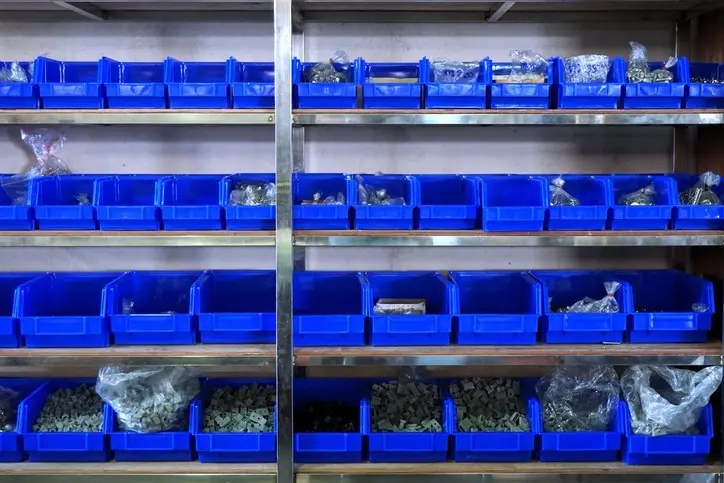
Common Manufacturing Inventory Challenges
Inventory Shortages
Missing materials often delay production schedules, shipments, and customer deliveries.
Inaccurate Inventory Counts
Manual spreadsheets and disconnected systems create inventory discrepancies and poor planning.
Poor Warehouse Visibility
Manufacturers often struggle to identify inventory locations, availability, and shortages in real time.
Limited Traceability
Without integrated systems, tracking lot numbers, serial numbers, and inventory movement becomes difficult.
How Manufacturers Improve Inventory Accuracy
Integrated manufacturing ERP systems help manufacturers improve inventory accuracy and operational visibility by connecting inventory management with work orders , purchasing , MRP planning , and traceability management .
- Real-time inventory transactions
- Inventory allocations to production orders
- Barcode scanning and warehouse tracking
- Cycle counting and inventory auditing
- Lot and serial number traceability
- FIFO inventory management
- Integrated purchasing and replenishment planning
- Inventory movement audit trails
Real-Time Inventory Visibility
Real-time inventory visibility helps manufacturers improve production scheduling, reduce shortages, and improve warehouse operations. Inventory quantities update immediately as materials are received, issued to production, transferred between warehouse locations, or shipped to customers.

Inventory listing screens provide visibility into inventory availability, warehouse locations, allocated inventory, and production shortages. Click image to enlarge.
Manufacturing Traceability & FIFO Inventory
Manufacturers in aerospace, medical, electronics, and regulated industries often require complete material traceability. Integrated inventory systems help manufacturers track lot numbers, serial numbers, FIFO inventory movement, expiration dates, and material certifications throughout production operations.
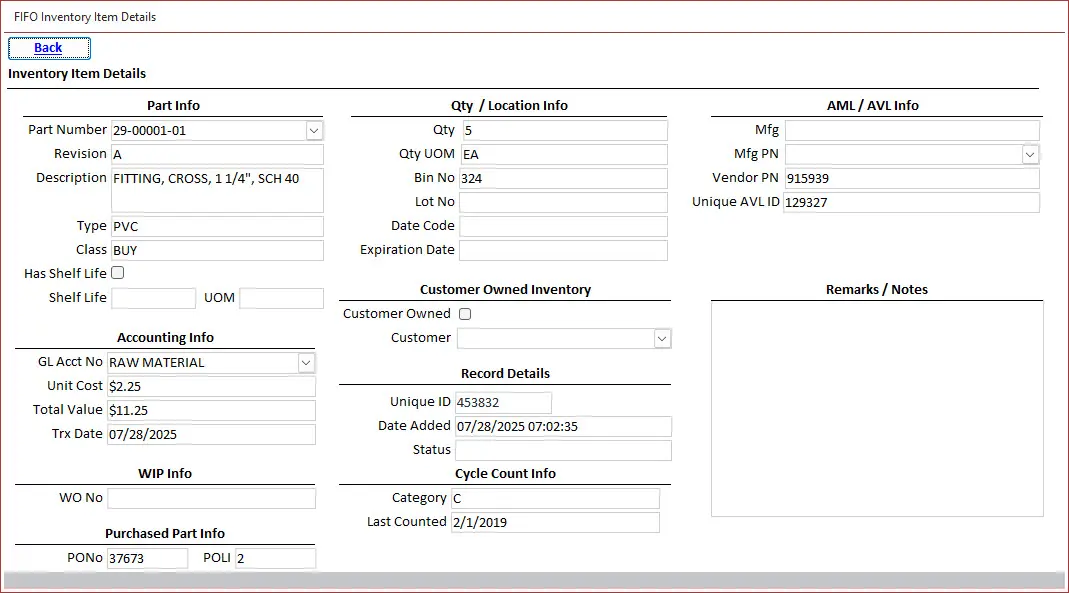
Inventory detail screens provide complete inventory transaction history, lot traceability, serial number tracking, FIFO inventory movement, and material visibility. Click image to enlarge.
Integrated Manufacturing ERP Inventory Software
Modern manufacturers require integrated systems that connect inventory management with Bill of Materials (BOM) management , shop floor tracking , work order management , purchasing , and manufacturing ERP software .
Integrated inventory management improves inventory accuracy, production visibility, traceability, warehouse coordination, and purchasing efficiency throughout manufacturing operations.
Related Manufacturing ERP Modules
Want to Improve Inventory Accuracy and Warehouse Visibility?
Request an Inventory Management DemoOr call 1-858-335-6421 to discuss your manufacturing requirements.